Observational Approach versus Surgical Intervention for Stones (OASIS)
Patient-Centered Outcomes Research Institute (PCORI)
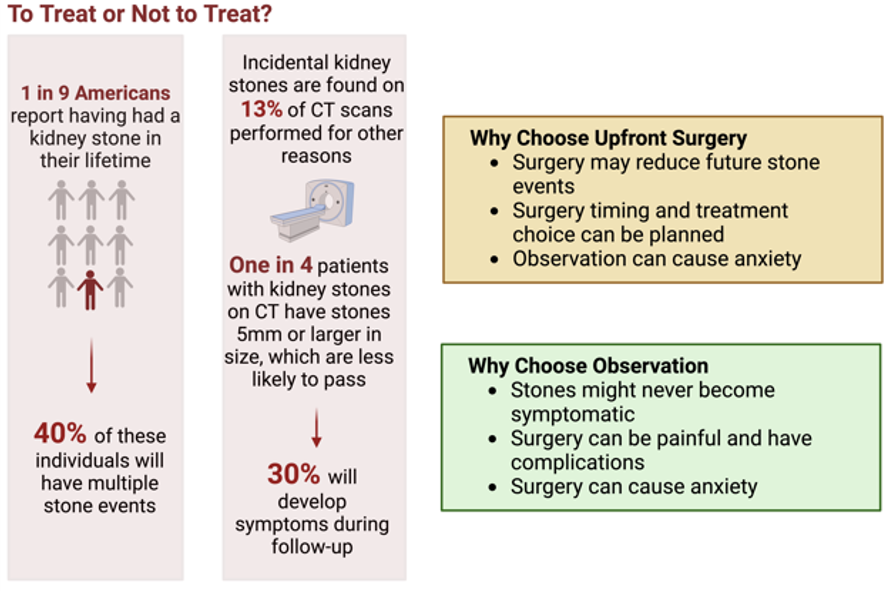
Approximately, 40 million Americans are diagnosed with kidney stone disease.
OASIS is a randomized clinical trial to determine the best management of individuals with kidney stones who do not have any symptoms.
Aim
The aims of the OASIS trial are:
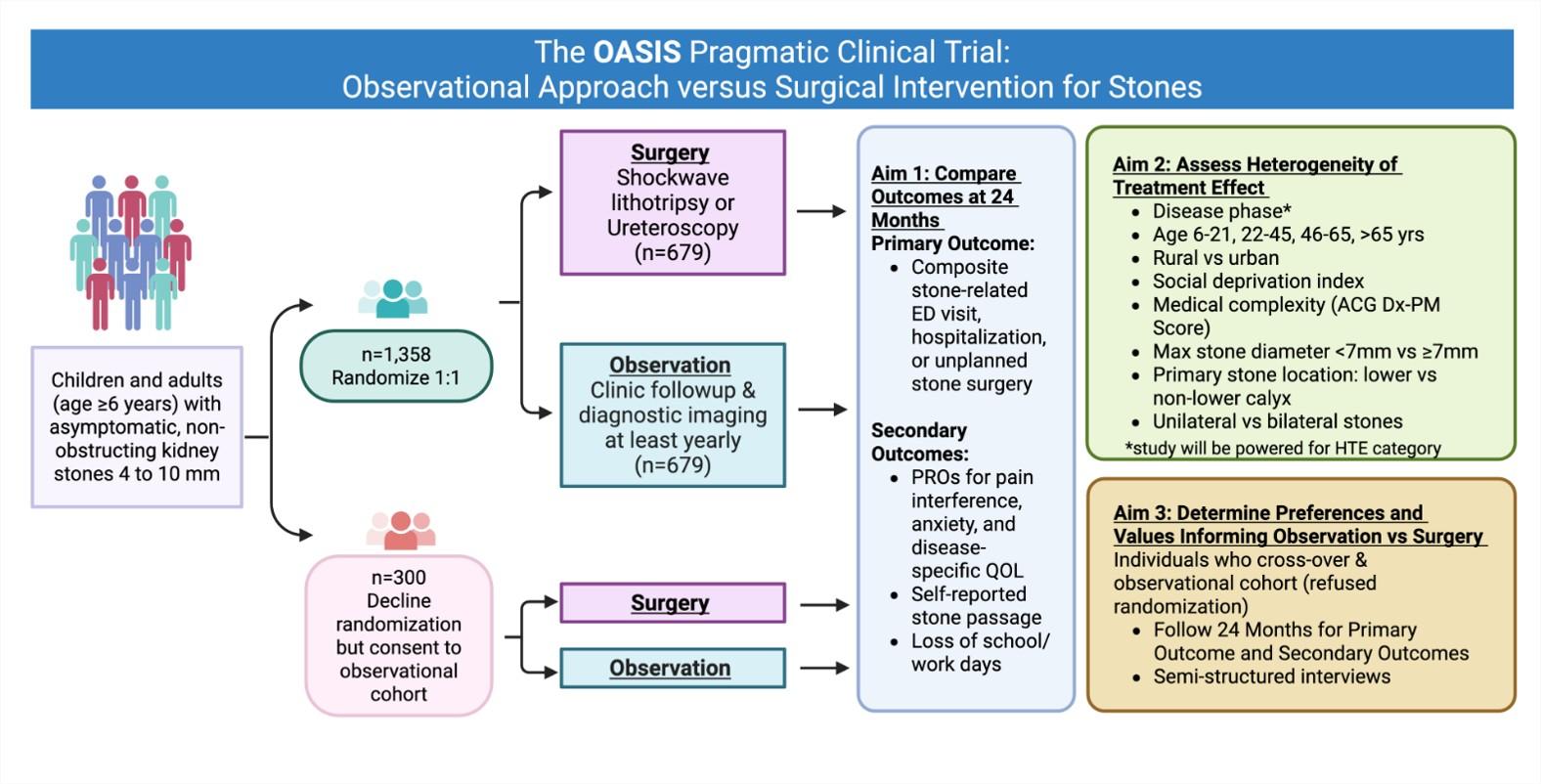
1) to determine whether observation compared to upfront surgery results in less healthcare-related life disruption due to kidney stones among children and adults with asymptomatic kidney stones;
2) to identity the groups benefiting the most from each strategy, and
3) to determine the preferences and values informing the choice between observation and upfront surgery.
Learn how to participate: https://redcap.chop.edu/surveys/?s=P7YPDMCFMY4A38YR
View on ClinicalTriaLs.gov: https://clinicaltrials.gov/study/NCT07718802
Video Link: add
How It Works
How to Participate
Who Can Participate?
Patients 6 years and older with asymptomatic, non-obstructive kidney stones measuring4 to 10 mm shown on CT, x-ray, or ultrasound within the past 6 months.
Screening and Enrollment
Eligible patients will be receiving urological care at one of the participating site locations.
Study Participation
After confirming that this is the right study for you, you will be randomized to receive surgery or observation treatmentforyour kidney stones. You will follow your regular clinical care. You will receive online surveys every 3 months for the duration of the study for 2 years.
Finishing the Study
24 months after you start the study you will complete a final online questionnaire.
Collaborators & Investigators

Enrolling Sites:
Scientific Support Teams (non-enrolling):
OASIS Team

Funding
PCORI funds patient-centered comparative clinical effectiveness research (CER).
CER compares the potential benefits and harms of different healthcare options, generating evidence that empowers patients, caregivers and other healthcare decision makers with information to make informed choices that reflect their needs and preferences.
CER is vital in today's healthcare landscape because we have an ever-increasing number of effective care options for many conditions. Too often, people face choices without information to help them weigh the tradeoffs Of their Options and make informed decisions for themselves or their families.